


Oxbow Conservation Area
Map: Open Street Map
Map: NRPC Map
Map: Oxbow Kiosk Map
Length: Fairway Trail about 1/2 mile.
Length: Fairway Trail about 1/2 mile.
Bobcat Loop about 1/4 mile.
Identification:
Identification:
Fairway Trail - White blazes.
Bobcat Loop - Blue blazes.
Difficulty: Walking: Easy.
Difficulty: Walking: Easy.
XC: not recommended, too short.
Biking: not recommended, too short.
Location: Limited parking, mostly on Fairway Drive at west end. Not even street parking at east end.
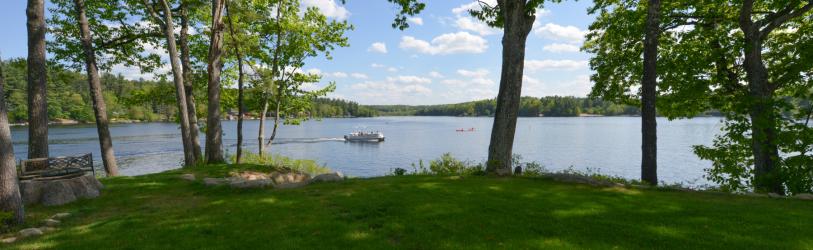
Description: The Oxbow Conservation Area is well-named; the adjacent Souhegan River meanders over the Amherst sand plain responsive to the vagaries of topology, scouring floods and blockage by downed trees. Old U-shaped wet depressions in the nearby fields show where it once ran and then cut straight across abandoning its former course. The river is still cutting new oxbows – some of the golf course riverbank on the opposite shore will disappear in the next few years. The Conservation Area will undoubtedly eventually share the same fate. But for now we have the two flat trails noted above that display two diverse habitats to the alert hiker. From the small parking area graciously provided on private property at the end of Fairway Drive one can stroll through a grassy, shrubby meadow and a pocket woodland of bird and small mammal habitat. Take a moment and note the patches of different plants; why do they form separate communities and not just mix at random? Take another moment and follow the small spur to a sturdy bench where you can contemplate the passing river (not to mention criticizing the golfer’s stance and swing across the river). Soon the trail forks. The left fork leads to another point on Fairway Drive and the right fork continues along the river to a loop on private property also graciously provided by the abutter. After the fork, both trails traverse a so-called Floodplain Forest habitat distinctly different from the meadow. Where birds dominate the meadow, this floodplain forest harbors mostly turtles, amphibians, bats, maybe a mink and an eagle. It is characterized by washout bowls, humps of sand, separated trees and scant understory vegetation. If you were to stand atop the bluff and look across to the opposite bluff you will appreciate the massive volume of water the Souhegan once commanded, forming these habitats. Come walk both trails for an hour a few times a year and over time watch the river work its will.